

Outside a lack of consistency, the biggest mistake I see beginning gymgoers make is workout ADD. They program hop, add every exercise they see on Instagram or TikTok, and/or are making up their workout on the fly. While I can understand the excitement of doing different stuff every time you step into the gym, as a beginner, less is often more.
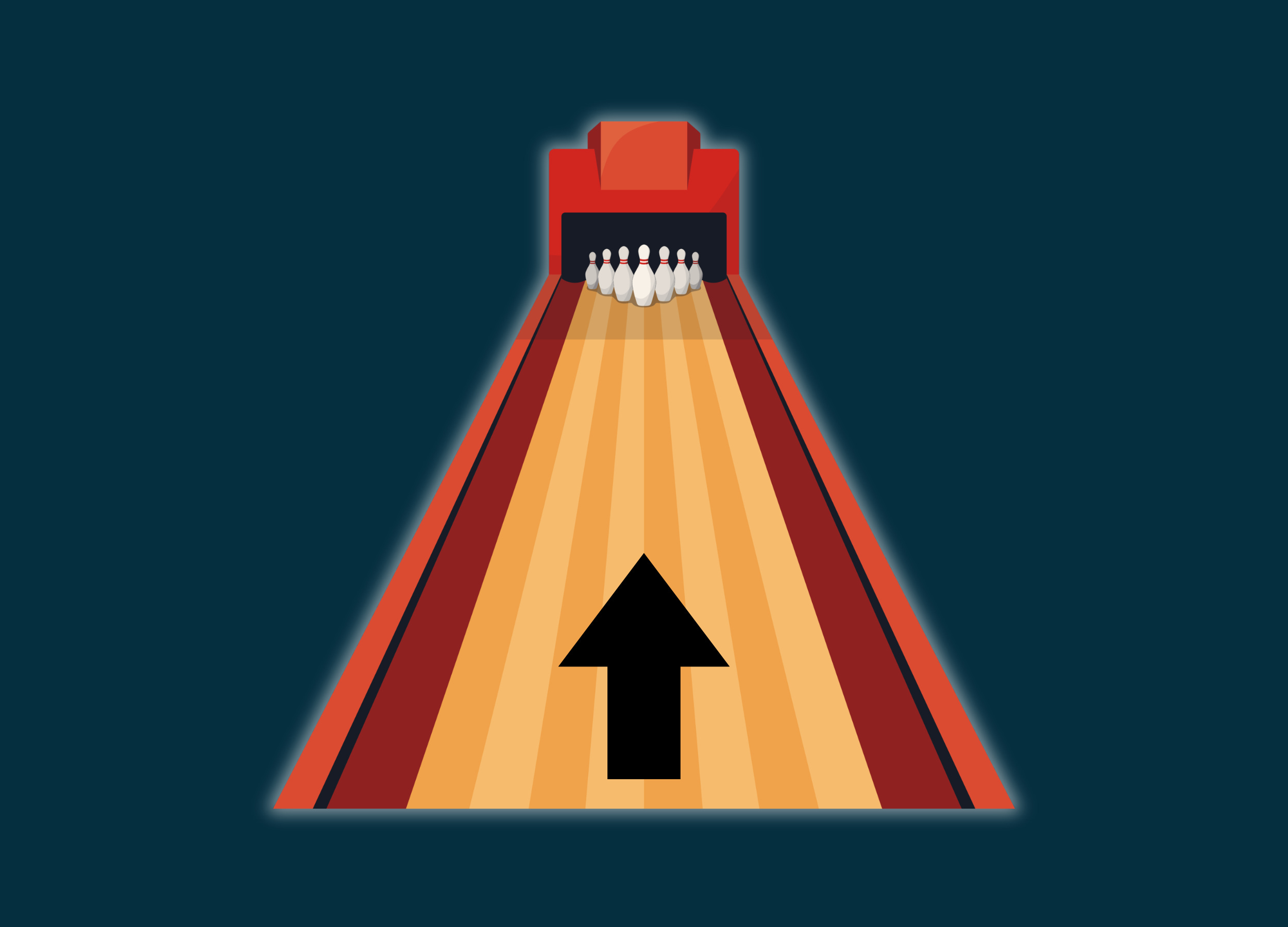
I came across this article by James Clear years ago and ever since, the concept of constraints has resurfaced often. The idea is simple: when we have complete freedom of choice, we can get bogged down by detail-overload. Properly placed constraints can act like gutter bumpers in a bowling lane, preventing us from wasting time and allowing only forward motion.
Let's talk about how to do that.
Simplify your workouts
People new to working out often mistakenly believe that complex is better than simple. This is called complexity bias. In truth, complex is rarely better than simple, especially when your primary goal is to build consistency.
Unnecessary complexity not only makes the workout take longer, it creates higher activation energy1. At least in my own experience, staring down a 6-8-exercise workout is much more daunting than a 4-exercise workout.
If you’re the kind of person that doesn’t want to spend any more time than necessary in the gym, this is exactly what you need and one of the reasons short workouts have become a mainstay in my fitness routine, like this 4-exercise simple dumbbell routine I use.
Add as many constraints as you need to
Constraints are arbitrary limitations designed to keep you from getting distracted by details. If you really want to reduce mental load, limit yourself in as many ways as possible to remove decision fatigue.
Here are some ways you could do that:
Limit the number of exercises
Less is definitely more when deciding on how many exercises you want to include in your program as a beginner. 4 is a good sweet spot for me, but if you really want to constrain things, you could go as low as 2 (or even 1, hell) with one upper and one lower.
Use all the same type of equipment
Do your whole workout with machines, dumbbells, kettlebells, barbells, whatever. One type of equipment. If you wanted to narrow that even further, yet sacrifice some effectiveness, you could even do the whole workout with one piece of equipment. Grab a single pair of dumbbells, a single kettlebell, etc. It isn’t perfect but if your choice is nothing or that, I know which one I’d have you pick.
Give yourself a time constraint
Set a hard limit for 15, 30, or 45 minutes for your workout. Not only will this ensure that you don’t dilly dally, it will reinforce the idea that you don’t need to spend any longer than that in the gym. Get in, get out.
Use the same reps or rep range
Rather than picking different rep counts for each movement, you can pick one and stick with it for all your exercises. 8 or 10 reps is an easy pick that covers most goals.
Note: This might not work very well when combined with the same piece of equipment constraint above. You don’t necessarily want to doing the same reps with the same weight on a dumbbell overhead press that you’re doing on a dumbbell RDL, for example.
Constraints like this are about spending less time figuring out what to do and more time doing. Action is the only thing that moves the needle forward. And now that you’ve got a solid list of useful constraints, let’s help you figure out what exercises are available to you and which ones to pick.
Luckily, we live in an age where we can leverage technology to take some of the guesswork out of creating programs.
Use AI
This may sound like blasphemy2, but if you want to make a simple program from scratch, you can always use a service like ChatGPT, Claude, or Gemini to put together a workout for you with a prompt like:
"I need two total body workouts using {insert available equipment here}".
Add as much context as you need to make it specific to your situation. You could ask it to shorten or lengthen the workouts based on time availability, to make the workouts suitable for a commercial, hotel, or apartment gym, change any exercises that don't work with your setup, etc.. It may not be perfect, but luckily, you don't need perfect right now. You just need somewhere to start.
Ask it to keep it to 4 exercises like my example if you want. Do whatever you need to do to get your workouts to a place where you can commit to doing them consistently.
Repeat your workouts
Once you've put together your workouts, stick to them. Getting stronger is the shortest path to improving your body composition, and that means progressing the weight, reps, range of motion, or perceived effort on the same exercises.
Changing exercises constantly adds too much lateral movement. It's a distraction. If we revisit the bowling lane example, it’s getting lost in the gutter. If there is a legitimate reason to change something—like you don’t have access to the equipment, you don’t feel comfortable performing the movement, etc.—then by all means, go back to the drawing board. But don’t keep swapping stuff around because you have a low threshold for boredom.
Getting stronger is the goal and to do that, you need to repeat the same movements and try to improve your performance on them.
Keep Showing Up
Now that you've put together a simple program, have learned that repeating that program is the best course of action, all you need to do now is keep showing up. A lack of patience and discomfort from doing the same thing prevents trainees from making long-term progress. But you're not like other trainees.
Trust me when I say that the people with the most success in the gym followed this formula on the path to where they are now. It requires patience and discipline and a willingness to forsake the easy path of novelty and distraction.
As always, keep the main thing the main thing. Keep things simple and keep showing up.
Higher activation energy in this context means it’s hard to get mentally “up” for the workout. Call it motivation, inertia, whatever. When we know something in front of us is easier, we’re more inclined to do it. When it’s harder, the opposite.
I’ve said it before and I’ll say it again. The value of personal training has never been in our ability to create programs. Program individualization for the vast majority of people is overrated. Most people need to check the same boxes, and swapping out a couple exercises doesn’t exactly make a program form-fitted. Great programs for all populations have existed on the internet for decades now. AI hasn’t changed that. It’s just made it even more accessible. This is a good thing.