

This may surprise people who have met me, but I didn’t catch the reading bug until I was in my mid to late twenties. I was an athlete and gamer for most of my childhood and early adulthood, which meant my tolerance for reading was almost non-existent.
Since then, it has become my favorite hobby and changed my life in ways I couldn’t have imagined. This is hardly an exhaustive list, but here are the non-fitness or health-related books that had the greatest impact on my life in no particular order.
How To Win Friends And Influence People by Dale Carnegie
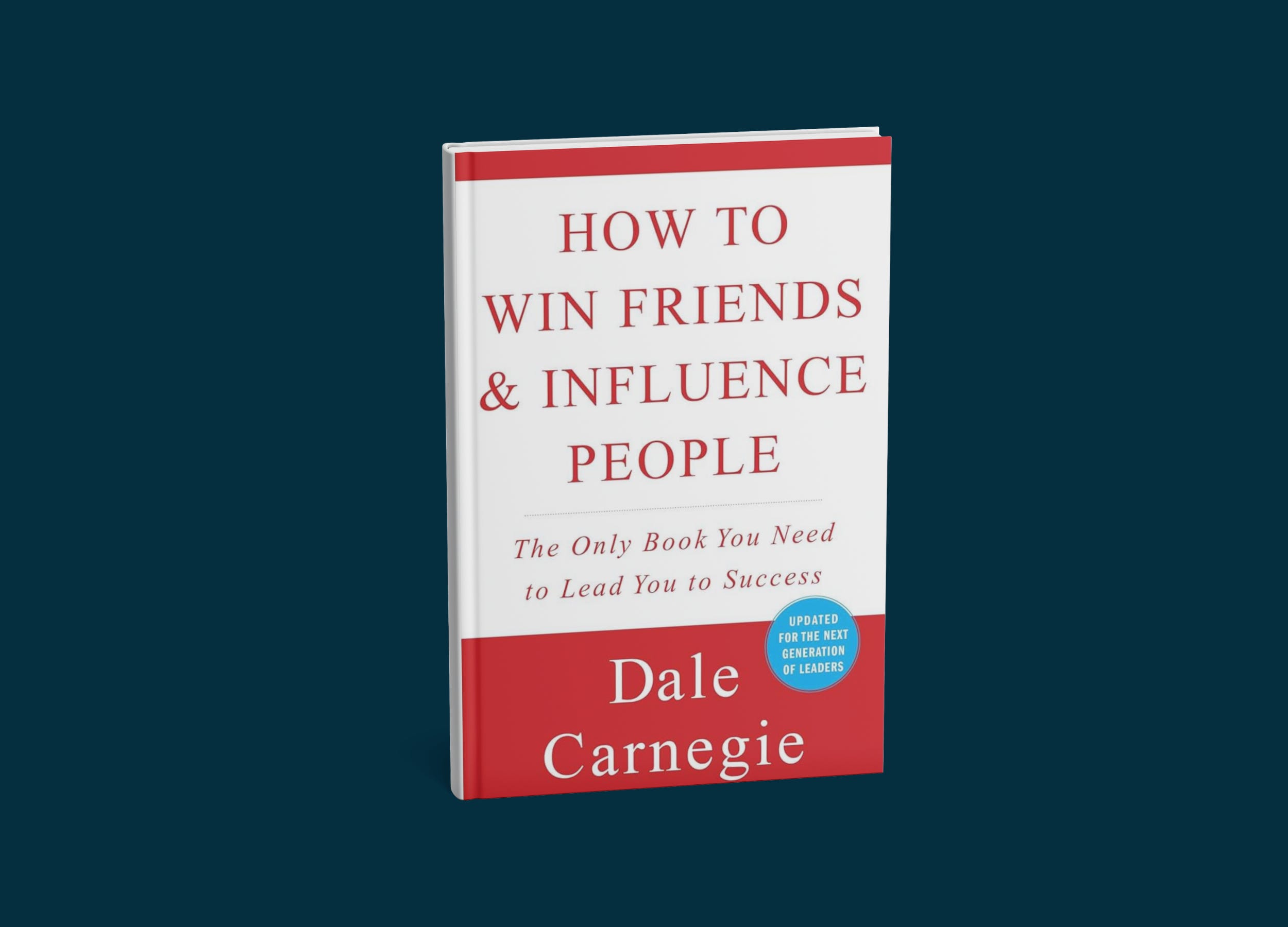
If there is any one book I would recommend to everyone, it is this book. Despite no formal education in psychology, Carnegie understood people better than most academics who spent their careers studying them. Think of this as a book on how to make people feel seen. Some of the concepts seem like common sense, but they’re so seldom applied.
Here are a few of the principles to whet your appetite:
Don’t criticize, condemn, or complain.
Give honest and sincere appreciation.
Become genuinely interested in other people.
Be a good listener. Encourage others to talk about themselves.
The principles when listed out may not seem that impressive or helpful, but Carnegie draws from a well of anecdotes from his own life and the experiences of his students to make each principle feel real and usable.
Trust me when I say that most of the people you meet in life are in desperate need of this book. Let’s be honest, you probably are too.
The Razor’s Edge by Somerset Maugham

There is a quote about life that goes something like this: “There are two important moments in a person’s life; the day they are born and the day they find out why.”
The reading version of this might be: “the day we started to read and the day we find out why.”
The Razor’s Edge is the book where I discovered why I read. It impacted me so profoundly that it immediately became my favorite book and has remained so ever since. I have never resonated so deeply with a “fictional” character as I did with Laurence “Larry” Darrell. I saw a reflection of myself—or at least the version of myself that I wanted to be. Surrounded by vacuous characters who care only about the opinions of others, Larry stands alone as this enigmatic, disciplined, and deeply introspective nonconformist on a mission to understand what it all means.
This book is partly biographical fiction in that Maugham wrote it about real people, but he uses some artistic license to make it more readable and protect each character’s true identity. Maugham is a phenomenal writer, and his keen observation results in some of the best dialogue I have ever read.
I will close out this summary with my favorite quote about Larry, which comes from the first chapter:
It may be that when his life at last comes to an end he will leave no more trace of his sojourn on earth than a stone thrown into a river leaves on the surface of the water.
There is something oddly beautiful about leaving nothing behind after your death. Going out exactly the way you came in.
In a culture obsessed with legacy and leaving a mark, there is something quietly rebellious about that idea. Larry wouldn't have had it any other way.
Hyperion by Dan Simmons
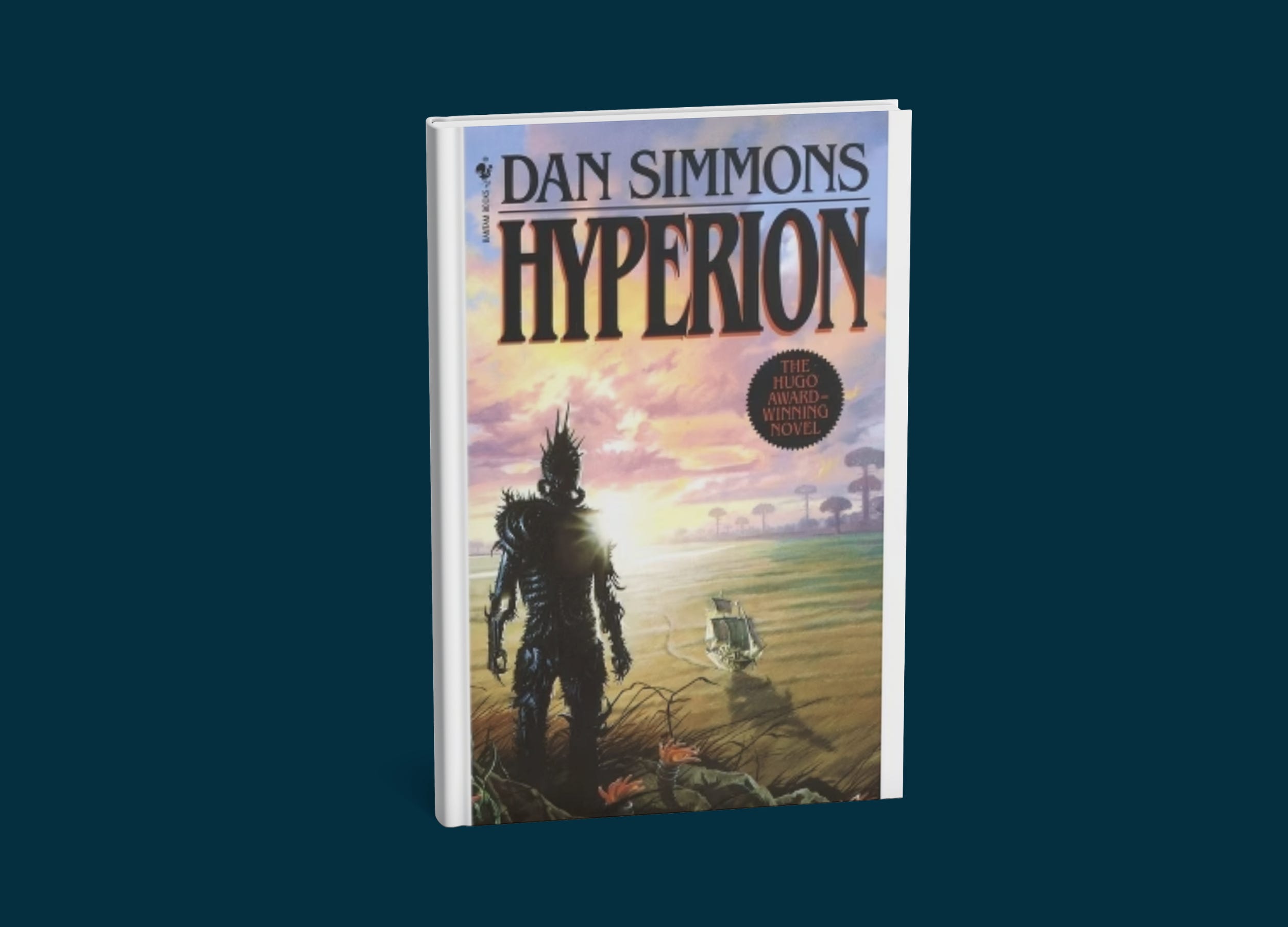
I’ve heard Hyperion described as The Canterbury Tales in space, and I think that’s appropriate. Seven pilgrims come together on a voyage to the planet Hyperion, where they share stories of their experience with the mysterious Time Tombs and their guardian, The Shrike.
I’ll admit it took me several tries to get into this book, but once I did I was hooked, and it’s now in my re-read rotation. It’s full of crazy scenes, environments, and characters. For instance, there is a woman whose interaction with the Time Tombs causes her to age backwards Benjamin Button style as her father watches helplessly. The most physically imposing of the pilgrims is an Amazonian-like warrior woman who falls in love with a cybrid—which is essentially an AI in a living human body. And perhaps one of the strangest stories is about a priest who encounters a remote tribe full of inbred semi-immortal pygmies.
And let’s not forget the Shrike: a timeless killing machine with glowing red eyes that impales its victims on metal spikes extending from its chrome carapace. I mean, how badass and horrifying is that?
Like Canterbury Tales, each pilgrim's story works on its own. But together they form pieces of a larger puzzle, and the picture that emerges is what makes the book special.
Simmons writes with more ambition and density than most science fiction, but the payoff is a world that feels genuinely lived in. It’s rare to find an author who can weave poetry and intricate technological concepts into the same book. There is a reason Hyperion won the Hugo award. It and the following three books of the tetralogy form what is, in my opinion, one of the best science fiction series of all time.
Stoner by John Williams
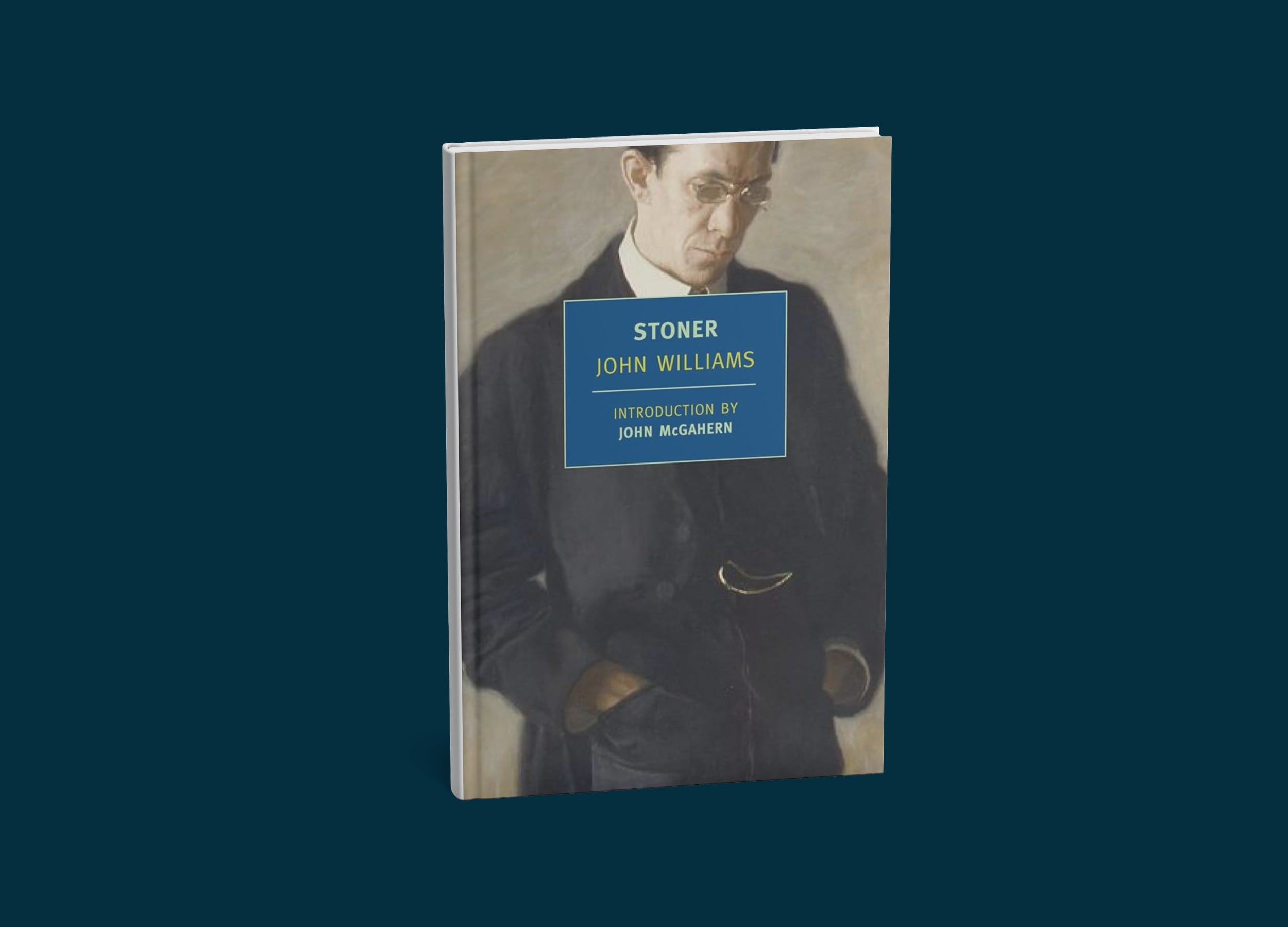
There is no reason why a book about a guy who becomes a literature professor instead of following in his father’s footsteps as a farmer in rural Missouri should be this engaging. Williams’s writing is just that good.
To give you an example of what I mean, here is one of my favorite quotes from the book:
In his extreme youth Stoner had thought of love as an absolute state of being to which, if one were lucky, one might find access; in his maturity he had decided it was the heaven of a false religion, toward which one ought to gaze with an amused disbelief, a gently familiar contempt, and an embarrassed nostalgia. Now in his middle age he began to know that it was neither a state of grace nor an illusion; he saw it as a human act of becoming, a condition that was invented and modified moment by moment and day by day, by the will and the intelligence and the heart.
Williams's prose takes the ordinary and makes it profound in a way that few other writers can. The plot, setting, and characters shouldn’t be interesting if you were just looking at them on paper. But they are.
Stoner’s story is one of the most quietly devastating things I’ve ever read. He is a good, hardworking man who seems ultimately unable to attain the things he wants in life. But there is a sort of stoic beauty in his persistence.
The message, to me, is about stubborn refusal to give up. When it seems like everything that you’ve worked for falls apart around you, you still have the choice to persevere. Because that’s life. There isn’t always a happy ending.
Beauty is observed in the small quiet moments, and it is the impermanence of such moments that make them so powerful.
The Fountainhead by Ayn Rand
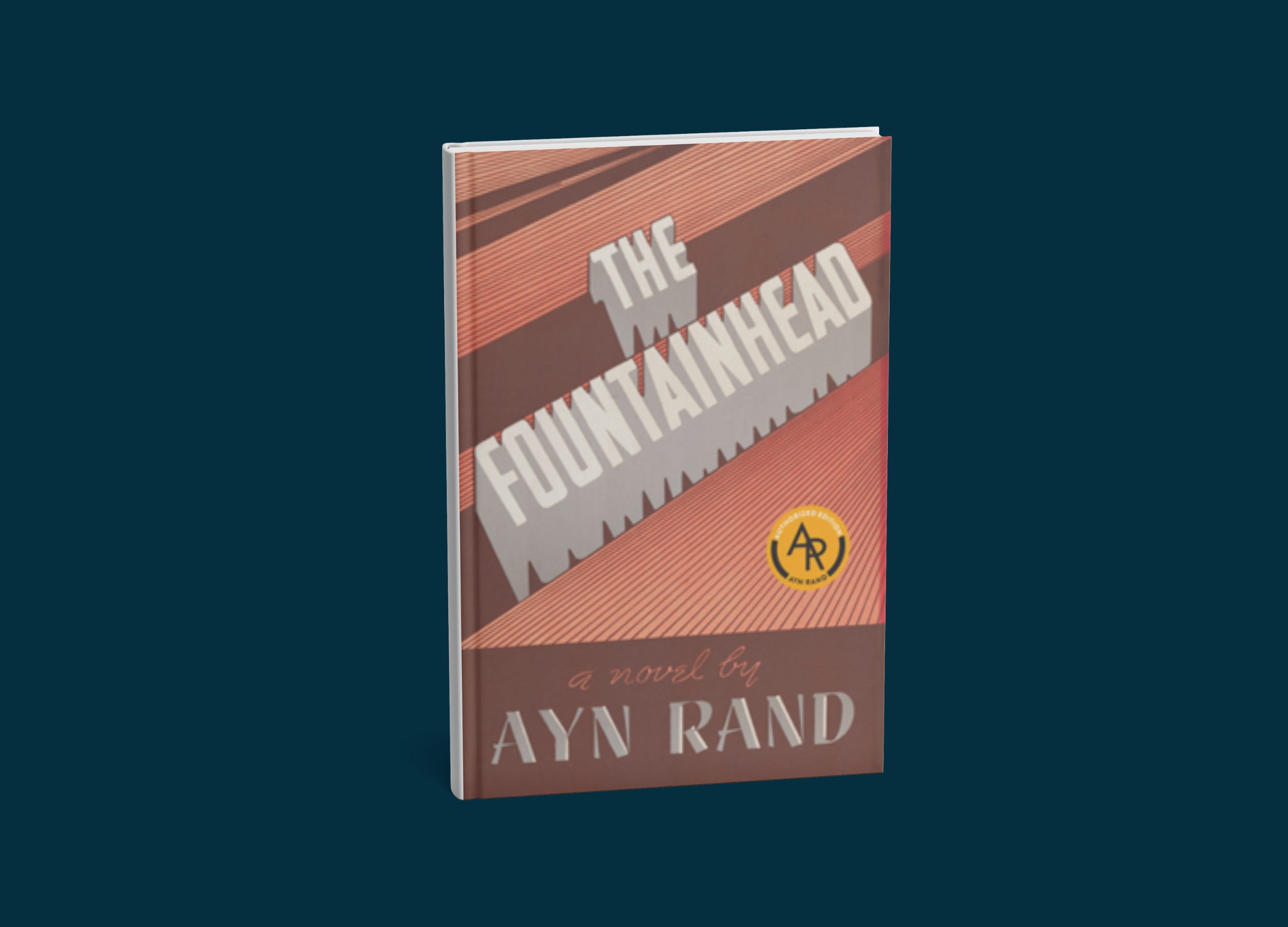
I was hesitant to include Rand because of how polarizing she is, but to me, the whole point of reading is to challenge the way you view the world. Rand is very good at that. Her political philosophy, Objectivism, places the individual above all else. She rejects altruism and “the collective good,” believing instead that the highest moral pursuit for any person is their own happiness and purpose.
In essence, she advocates for a radical self-reliance. Through this “Rational Egoism,” she argues that the world becomes a better place because it is populated by independent, productive individuals.
Many find her politics detestable, but if you cannot engage with ideas you disagree with, you limit your ability to think critically. I thoroughly enjoyed this book—not because I am a total convert to her philosophy, but because the writing is compelling and Howard Roark is one of my favorite fictional characters. I was inspired by his fierce independence and his unwavering integrity, even when it came at the expense of his livelihood.
People may argue that Rand’s writing is too on the nose and unrealistic, and I’m inclined to agree to an extent. Many of her characters, for instance, are capable of having absurdly high-level and often didactic conversations that can feel out of place or jarring. It’s clear these characters are the vehicle for her philosophy, so as long as you understand that, you can accept them for what they are.
The bottom line is that you don’t have to wholly agree with a writer’s philosophy to find the story engaging. And The Fountainhead, to me, is Rand’s most accessible work and a good place to start for anyone who’s willing to open their mind a bit.
Meditations by Marcus Aurelius
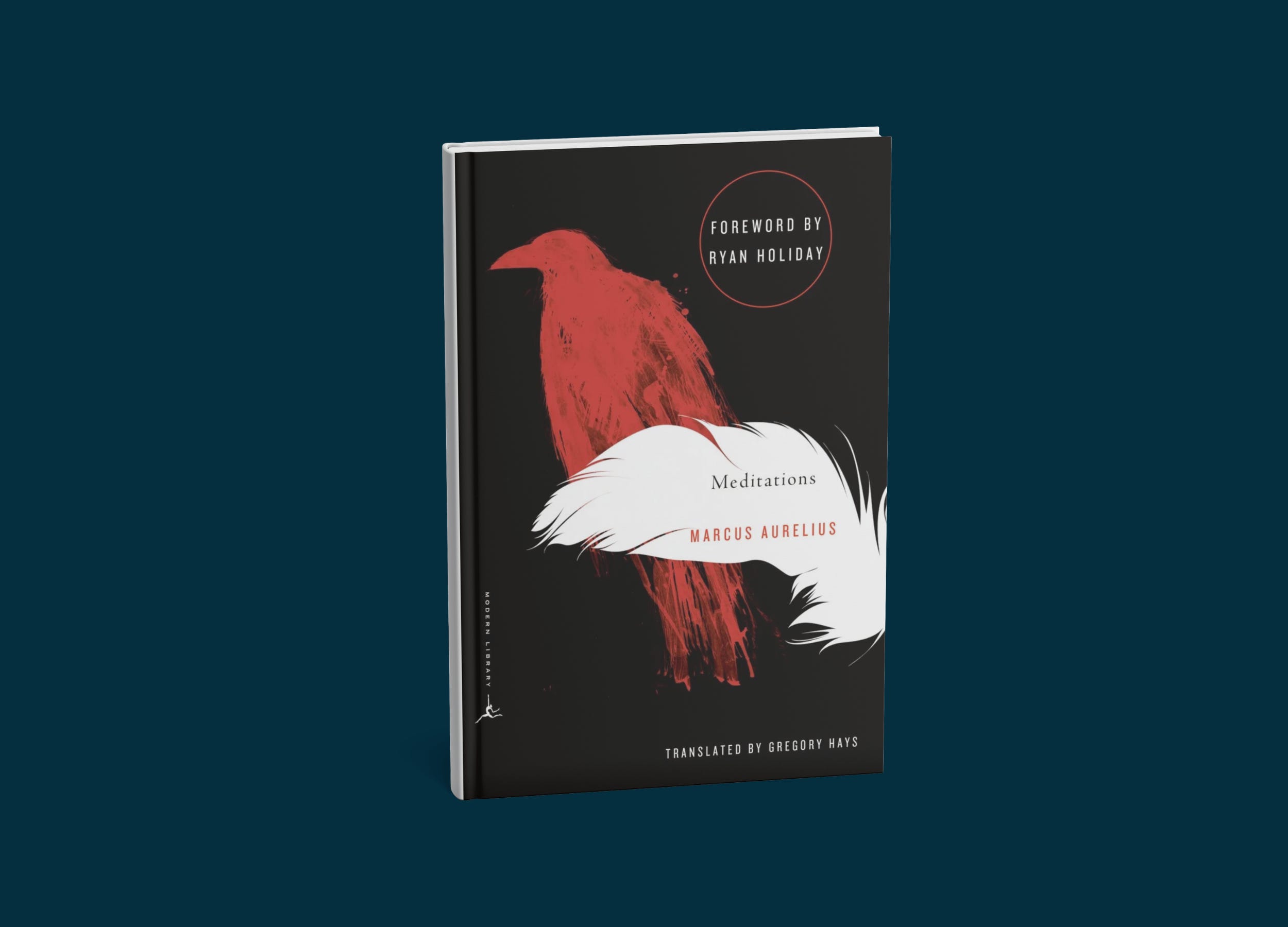
Finally, we have arguably the most important book on this list, Meditations by Marcus Aurelius. I discovered stoicism during a very dark time in my life. I was in my late twenties and working too many hours in a job I hated with micromanaging bosses and almost no autonomy, I was utterly lost on what I wanted to do with my life, and I was in an unfulfilling relationship.
I was slamming too many coffees (at least one of which always had a triple shot of espresso in it), and I think between the caffeine intake and the extreme job and life dissatisfaction, something in my brain…broke.
I had a panic attack at around 1am one night, and I remember walking out on my balcony struggling to breathe hoping the cool air would calm my nerves. It did eventually, but it turns out the panic attack was just the beginning.
It kicked off a month long period of extreme depression. I couldn’t eat, couldn’t sleep, couldn’t have sex. All the color had been drained out of my life. I lost probably 10 pounds in a month, and all the activities I could normally rely on to get me out of a mental funk just weren’t working. I rarely employ hyperbole, so trust me when I say that this period gave me new insight into why depression so often leads to suicide. It is an all-encompassing, inescapable misery that I do not wish on my worst enemy.1
I dropped the caffeine, which unfucked my brain chemistry, and slowly started to crawl my way out with what I now realize were cognitive behavioral therapy concepts and techniques, which draw heavily from stoic principles. I discovered the seminal stoic works2 and they not only helped me find my way back to myself, they gave me the tools I needed moving forward to deal with whatever life threw at me.
Anyone who has experienced true depression will understand when I say that Meditations, and more generally stoicism, saved my life.
I recommend anyone seeking stoic wisdom to start with Meditations3, because there is tremendous wisdom to be found in the private thoughts of one of the most powerful men in human history struggling with the same things you are nearly two thousand years later.
Let’s Bring It Home
There are many other books that have had a significant impact on my life, but didn’t quite make the A-list (yet).
Man’s Search For Meaning by Viktor Frankl is a book about human resilience and how humans can find meaning and purpose in even the most dire conditions. This quote embodies that message: “Everything can be taken from a man but one thing: the last of the human freedoms—to choose one’s attitude in any given set of circumstances, to choose one’s own way.”
As a naturally anxious person, How To Stop Worrying And Start Living by Dale Carnegie has been instrumental in helping me find productive ways to deal with that anxiety. One of my favorite lessons from the book is about living in “day-tight compartments”. In other words, taking it one day at a time.
The Stranger by Albert Camus introduced me to existentialism, which created a seismic shift in how I view existence and death. It played an essential role in my journey to nihilism, which is the belief that life has no inherent meaning. I would call myself a cheerful nihilist though, because I believe meaning can be found in anything that makes us happy or brings us purpose.
James Clear’s book Atomic Habits did what earlier books about habits failed to do—it gave the blueprint for how to change them. And it did so with ruthless efficiency; there are no wasted words. I think about The Four Laws of Behavior Change every time I want to improve my habits.
Thinking I was going to get a book on how to be more productive, Oliver Burkeman’s book Four Thousand Weeks actually brought me face to face with my finitude. I succinctly label it the anti-productivity productivity book. He suggests that instead of trying to get it all done, we should embrace our limitations so that we can focus on the work and life that matters.
And lastly, the most recent addition to the list is Lonesome Dove by Larry McMurtry. This book may seem out of place, but it made the list for one simple reason: it’s a good fucking book. As much as I appreciate good prose, I loved this book because I didn’t even notice it. The story was so well-crafted that I forgot I was reading entirely. I fell into the story and it never let me go. This is a western done right with one of the most unforgettable ensembles of characters—my favorite being Augustus “Gus” McCrae. I cannot recommend it enough.
Okay, now we’re actually bringing it home
I believe time is the greatest filter for quality. Most of the books on this list are at least 30-40 years old. The best works persist through the years and although new books CAN be great, I tend to pick older books as enough time has elapsed for the time sieve to do its thing.
My reading journey is far from over, and who knows, maybe this list will look very different in 20 years. But every book in this group has a permanent place on my re-read list, so odds are that I will find them even more important to me as time passes.
Hopefully you got a good recommendation or two from here, and if you have any books that profoundly impacted your life, please recommend them in the comments!
Thanks for reading.
This explanation of depression from David Foster Wallace from his book Infinite Jest is spot on: "The so-called ‘psychotically depressed’ person who tries to kill herself doesn’t do so out of quote ‘hopelessness’ or any abstract conviction that life’s assets and debits do not square. And surely not because death seems suddenly appealing. The person in whom Its invisible agony reaches a certain unendurable level will kill herself the same way a trapped person will eventually jump from the window of a burning high-rise. Make no mistake about people who leap from burning windows. Their terror of falling from a great height is still just as great as it would be for you or me standing speculatively at the same window just checking out the view; i.e. the fear of falling remains a constant. The variable here is the other terror, the fire’s flames: when the flames get close enough, falling to death becomes the slightly less terrible of two terrors. It’s not desiring the fall; it’s terror of the flames. And yet nobody down on the sidewalk, looking up and yelling ‘Don’t!’ and ‘Hang on!’, can understand the jump. Not really. You’d have to have personally been trapped and felt flames to really understand a terror way beyond falling."
Meditations, combined with Epictetus’s Discourses and Selected Writings and Seneca’s Letters From A Stoic, form what I, and many others, call “The Holy Trinity” of stoicism.
I’m partial to the Gregory Hays translation, but there are probably free versions of it floating around as well.